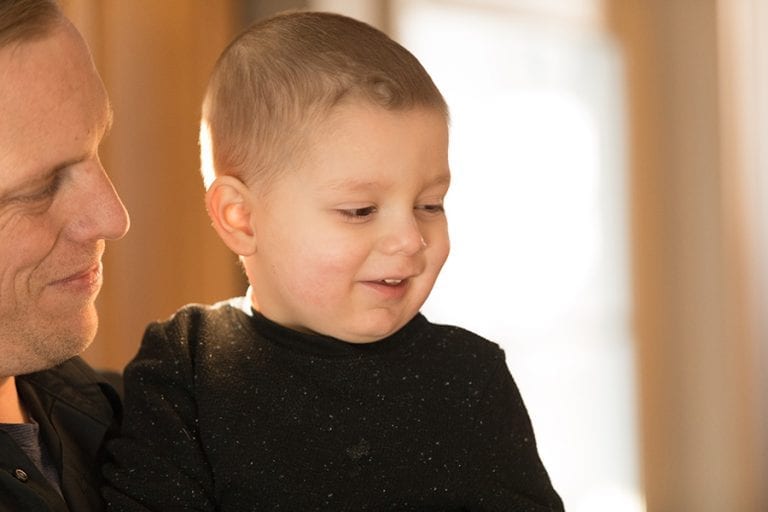
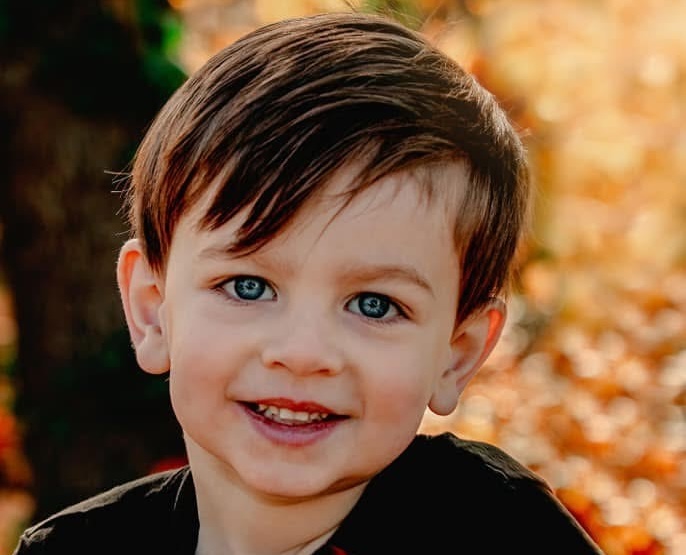
In May 2025, Jay sat his 7-year-old son, Lincoln, down for a serious, man-to-man talk. He even let him hold a beer, just to communicate the seriousness of the conversation. He wanted his son to feel empowered, like he had a seat at the table of his own life, even though that life was about to take another difficult turn.
He told Lincoln that the bruises he’d been noticing weren’t just from baseball and being an active kid. Lincoln had leukemia — again.
A Tale of Two Diagnoses
Lincoln was first diagnosed with leukemia in 2021 when he was just 3 and a half years old – he’d been growing increasingly tired for months, and when he started asking to eat his meals and snacks while lying down, his parents, Jay and Megan, took him to the doctor. He was diagnosed with acute lymphoblastic leukemia (ALL), the most common type of cancer in children.
Lincoln tolerated the treatment well: he spent just six days in the hospital, and his leukemia responded positively to standard chemotherapy. He finished treatment in the summer of 2023.
Nearly two years after his treatment for ALL ended, he went back to the doctor for one of his regular three-month bloodwork checkups. Tests showed cancer. Again. But this time, Lincoln was diagnosed with acute myeloid leukemia (AML), a more rare and aggressive form of leukemia. Doctors attribute this second diagnosis to the treatments Lincoln received for ALL four years ago.
When she heard that, Megan said she was furious.
“I was so angry about that, but it also made me question myself as a mother,” Megan said. “I remember signing those papers that told us about the risks, but in that moment, you’re just desperate to save your child. Now, we’re paranoid, we’re doubtful, we’re second-guessing every move we make. We’re always thinking, even if we can find something that will help him now, what’s it going to do to him long term? We’ll just never be the same.”
Treatment for AML has been much harsher for Lincoln — he doesn’t tolerate the medications as well. His appetite has decreased, he experiences leg pain, and he’s had to spend more time in the hospital. What’s worse, though, is that these harsh treatments don’t seem to be working. After three rounds of chemotherapy, doctors told Lincoln and his parents that his cancer was refractory, which means it isn’t responding to treatment. Lincoln’s parents have had to look far and wide to find him other treatment options. His doctors recommended a drug called Aza (azacitidine), which hinders the growth of cancer cells. Aza is not FDA-approved for kids with AML, but it slowed the growth of his cancer enough so that he could receive a bone marrow transplant. With ALL, Lincoln had a treatment plan backed by decades of research and the promise of a 95% survival rate. With AML, he and his family are left with very little research, no roadmap and no guarantees.
“I’m too emotional to do all of the research, but my husband really dives in and has been trying to see what else we can try,” Megan said. “Lincoln’s doctors have been great. They’re always communicating with us about clinical trials and what else we can do. But at this point, there’s so little research that they’re learning with us. They’re trying to figure things out at the same time we are.”
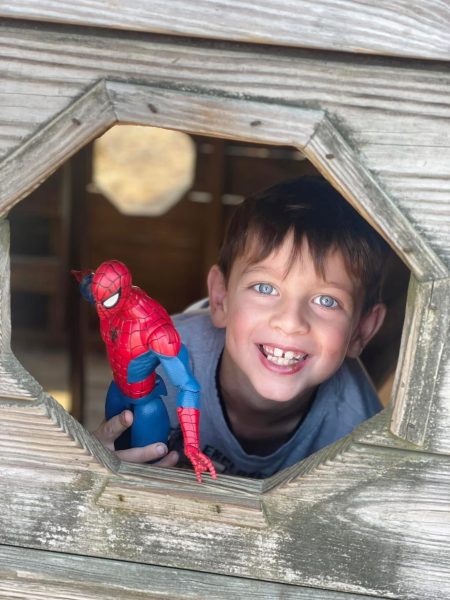
Despite all the uncertainty, Megan says she’s immensely proud of the caring, sensitive little gentleman Lincoln is becoming. When he’s in the hospital, he talks to other kids in the playroom about their treatments and compliments them on their bravery. Doctors tell Megan they always hear him say “please” and “thank you.” He recently told his mom he wants to take a girl from his swim team out for an ice cream date. When the family pet passed away, Lincoln, knowing his mom was the closest to the dog, comforted her and came up with ways to help her feel better.
“He’s just a sensitive, old soul kind of kid,” Megan said. “Maybe some of that comes from what he’s been through, but I think it’s just who he is on a deeper level. He cares really deeply for people.”
Cancer’s Emotional Toll
Megan says since Lincoln’s second diagnosis, she’s especially on edge when it comes to children’s health. In her job as a special education teacher, she is always on the lookout for kids who don’t seem to be acting like themselves, or who appear unusually thin or pale.
“It’s fundamentally changed me as a person,” she said. “I took a leave of absence from work when Lincoln was first diagnosed, and when I came back, I saw a little boy, also named Lincoln, who always just seemed pale and tired and moody. I was asking his teachers and the school nurse to just check in on him and make sure he was okay… It really triggered me. I couldn’t stop thinking about him.”
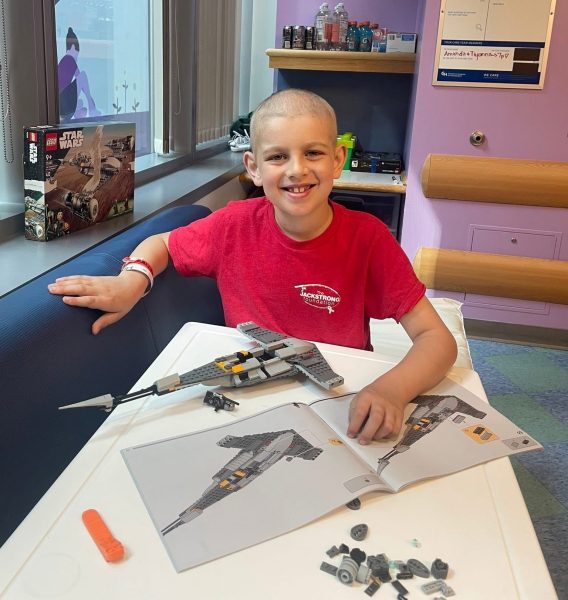 During Lincoln’s hospital stays, Megan channels all her energy into creating positive memories for Lincoln. She and Lincoln will dress up in costumes all week and ask hospital staff to vote for their favorites. She’ll construct elaborate LEGO sets with him and help him race his scooter around the hospital hallways. Every way she can, she’s trying to let in sunlight during days that would otherwise feel dark.
“I don’t want him to have PTSD or have a fear of doctors or hospitals when he gets older,” Megan said. “This experience has completely changed me, and nobody can really protect me from that, but I can protect him. It’s the teacher in me – I’m doing everything I possibly can to make the days fun.”
A Small Part of A Greater Story
Lincoln’s future is far from certain — right now, everything hinges on finding a treatment that works for his aggressive cancer. But Megan says she gets through hard days by imagining a future for Lincoln where cancer becomes a smaller and smaller part of his story. She’s hoping for a day when it’s so far behind him that he can joke about what he’s been through.
“I’ve told him he’ll be all set with a topic for his college application essays,” Megan said. “I’ve even joked, like, the first time a girl breaks his heart, he can just think, well, whatever, I beat cancer. I want him to know that cancer doesn’t have to be his story forever.”
Donate to fund essential research for kids like Lincoln.
There are too few options for Lincoln and other kids with AML. Brilliant scientists are working to find better treatments and cures for these kids — but they need funding to keep moving forward. Your donation helps researchers unlock lifesaving treatments for kids with rare cancers.