Ever since her 2-year-old daughter, Emma, was diagnosed with cancer, Ashley’s motto has been “celebrate everything.” She asks Emma’s doctors for the next small victory they can set their sights on, and when Emma reaches it, her family celebrates like crazy. In the cancer world, it’s tradition to “ring the bell” when finishing treatment, but Emma’s family rings the bell for every milestone she reaches, big and small. Ashley’s thought is this: When making it to the finish line isn’t a guarantee, you have to celebrate every step in the right direction.
“We are ringing multiple bells for Emma, even if that’s kind of against protocol,” Ashley says. “We are trying to cherish and savor everything we can.”
The Seventh Floor
Emma’s parents, Ashley and Jacob, noticed something was wrong when Emma, who they describe as their “full-throttle 2-year-old,” started acting tired and uncomfortable, like she was always in pain. Doctors initially suspected a virus or a urinary tract infection, but when antibiotics didn’t help and Emma still wasn’t acting like herself, Ashley and Jacob took her to the emergency room at Children’s Minnesota.
“We thought we were just going in for another round of antibiotics, and they said, ‘Actually, we’re going to send you to the seventh floor,’” Ashley said. When the elevator doors opened on the seventh floor, the sign read, “hematology/oncology.”
Emma was diagnosed with acute myeloid leukemia (AML) with RAM phenotype, a rare and aggressive form of leukemia with a 15% survival rate. She started chemotherapy on her second birthday. Instead of celebrating with cousins or friends, Emma shared her birthday cake with Dr. Megan, her oncologist, and the rest of the medical team.
Quantity and Quality of Life
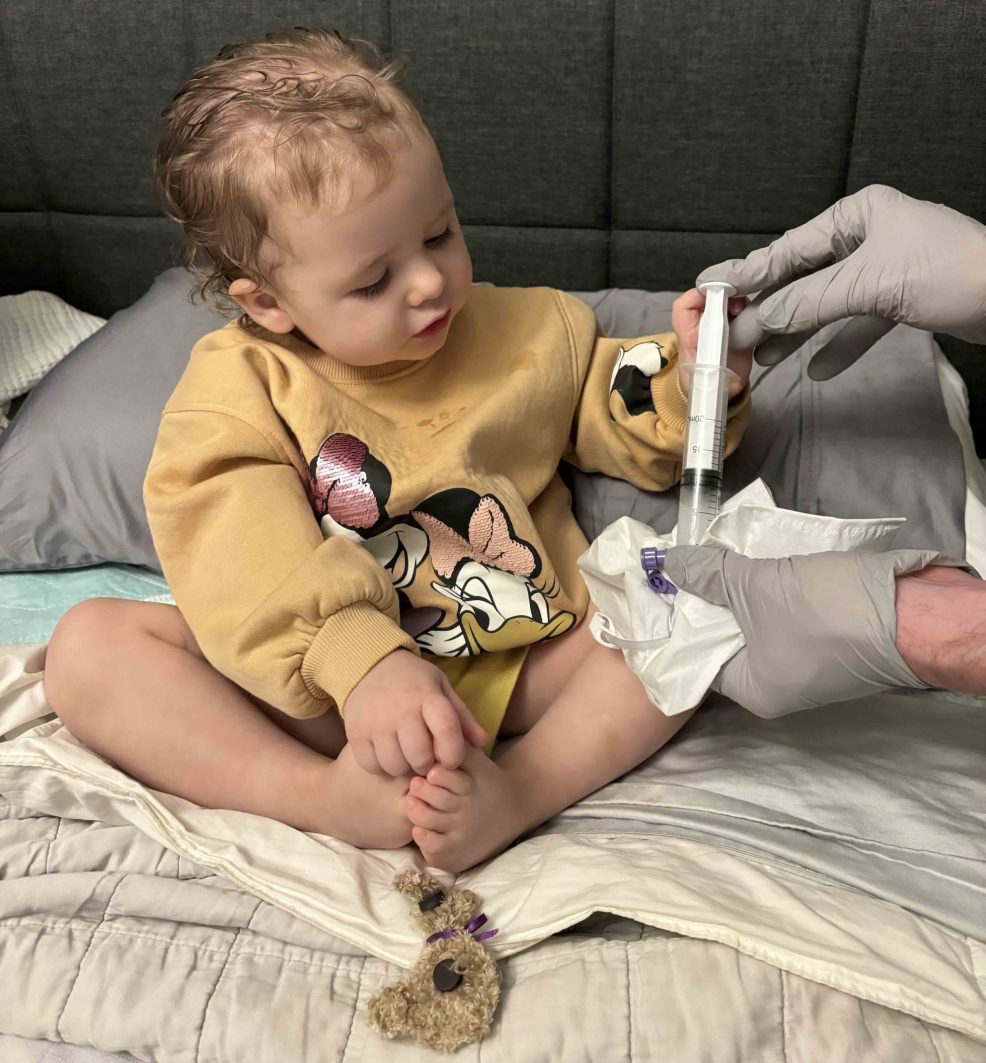
Instead of putting Emma on the standard AML treatment path, which would have involved numerous, month-long inpatient hospital stays, Emma’s parents and her care team decided on a different approach. Through compassionate use (a way for patients to receive experimental treatments outside of clinical trials), Emma was able to access newer drugs that allowed her to receive most of her treatment from home.
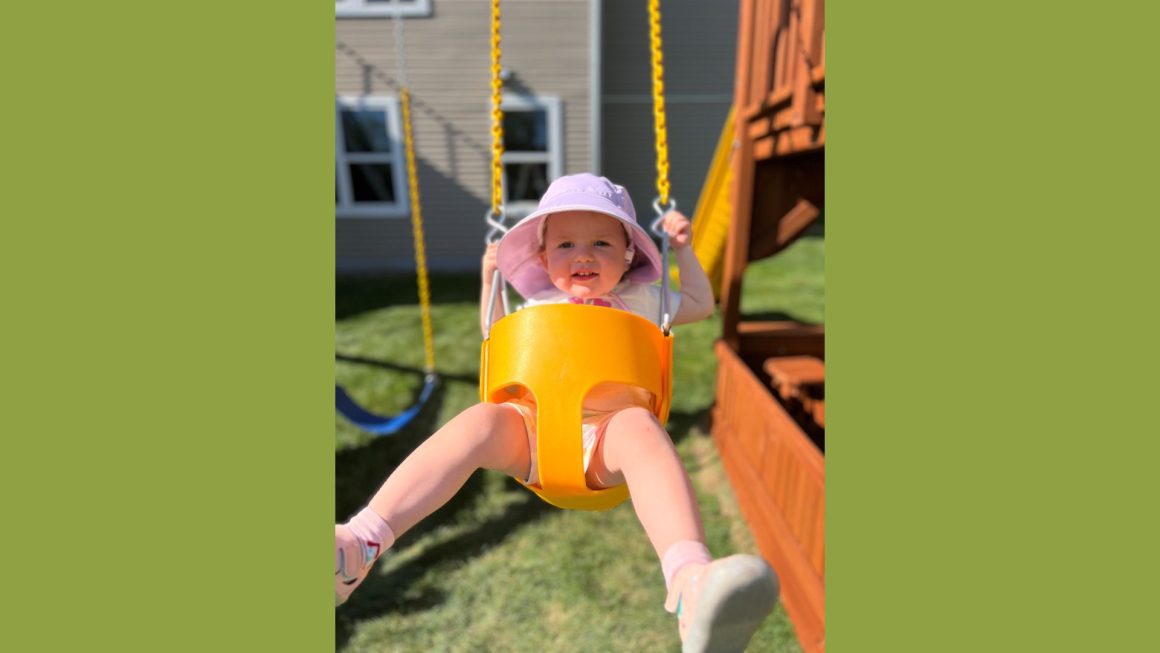
“Emma got to spend her summer on the playground with her sister instead of in the hallways at the hospital,” Ashley said. “The fact that this new drug is much less intense than the standard of care meant that Emma got to keep playing soccer to stay active. One of her doctors even told me, ‘I’ve never seen a kid do better than this.’”
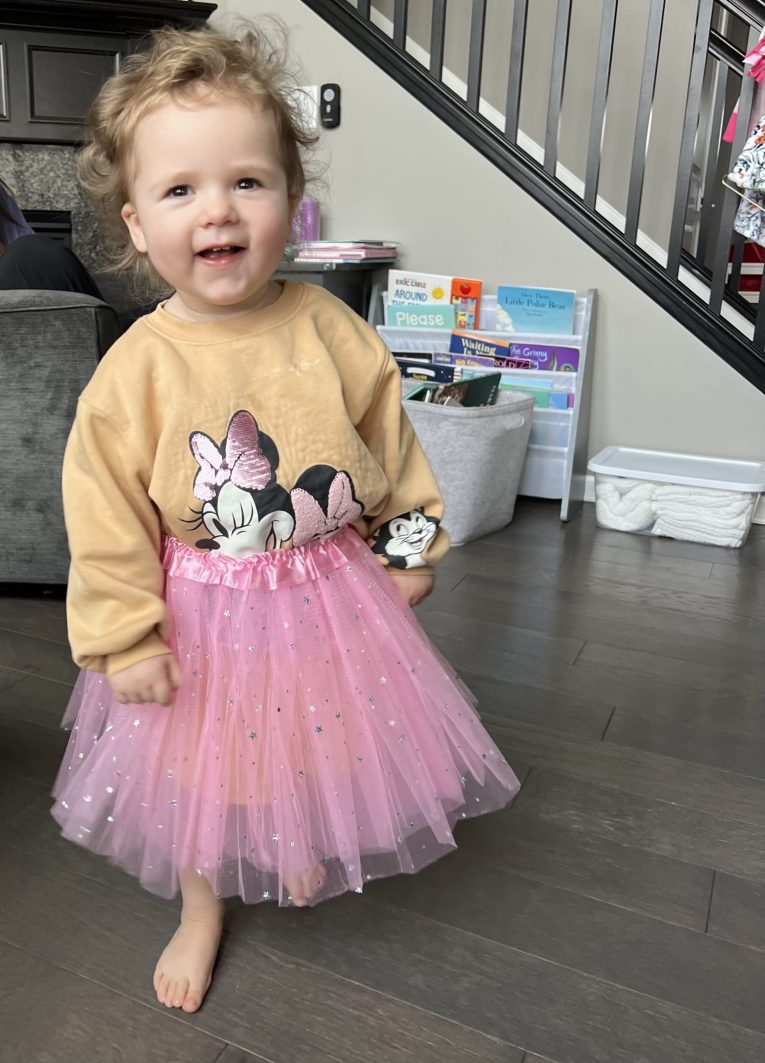
Emma stayed strong through five months of chemotherapy, which gave her a huge advantage when she underwent a bone marrow transplant, an intense procedure that aims to restore the body’s ability to make healthy blood cells. In October 2025, Emma celebrated being 100 days post-transplant, a huge milestone that means she’s out of the critical period where most major complications occur. She was in treatment for a total of eight months and spent 67 nights in the hospital. She’ll receive maintenance treatment and frequent follow-ups for the next two years.
A cancer-free future is still far from guaranteed, but Emma is doing better than anyone could have imagined just a few short years ago. Her doctors now put her survival chances near 50% - up from the overall survival rate of 15% that most kids with AML-RAM face. Still a terrifying reality, but Ashley says she’s endlessly grateful for this research - not only for giving Emma more time, but also allowing her to use that time to simply be a kid.
“We had nights where we didn’t know if Emma would make it to the morning, and now we get to plan trips to the apple orchard,” Ashley said. “Research unlocks both quantity and quality of life for these kids. For so long, the odds were stacked against us, and now we feel like we have a fighting chance.”
Childhood Interwoven with Cancer
For Emma, childhood and cancer are woven together – she can’t remember a life before it. Many of her comfort items are connected to her hospital stays – she loves to wear her “hospital socks,” and her favorite stuffed animal is named Asha, after the therapy dog she met at Children’s Minnesota. She greets her doctors and nurses like they are family, and anyone who leaves her room at the hospital or clinic gets a cheerful, “See you later, alligator!”
Throughout her treatment, people who care about Emma have gone out of their way to give little slices of childhood back to her. A local nonprofit called Wishes and More built a swing set in Emma’s backyard. A handful of moms in her community created a “craft train,” dropping off craft kits so Emma and her sister, Nora, always had something new to play together. Ashley’s brother, a talented baker, dropped off a loaf of sourdough that was so good, it got Emma to take her first bites of solid food that week.
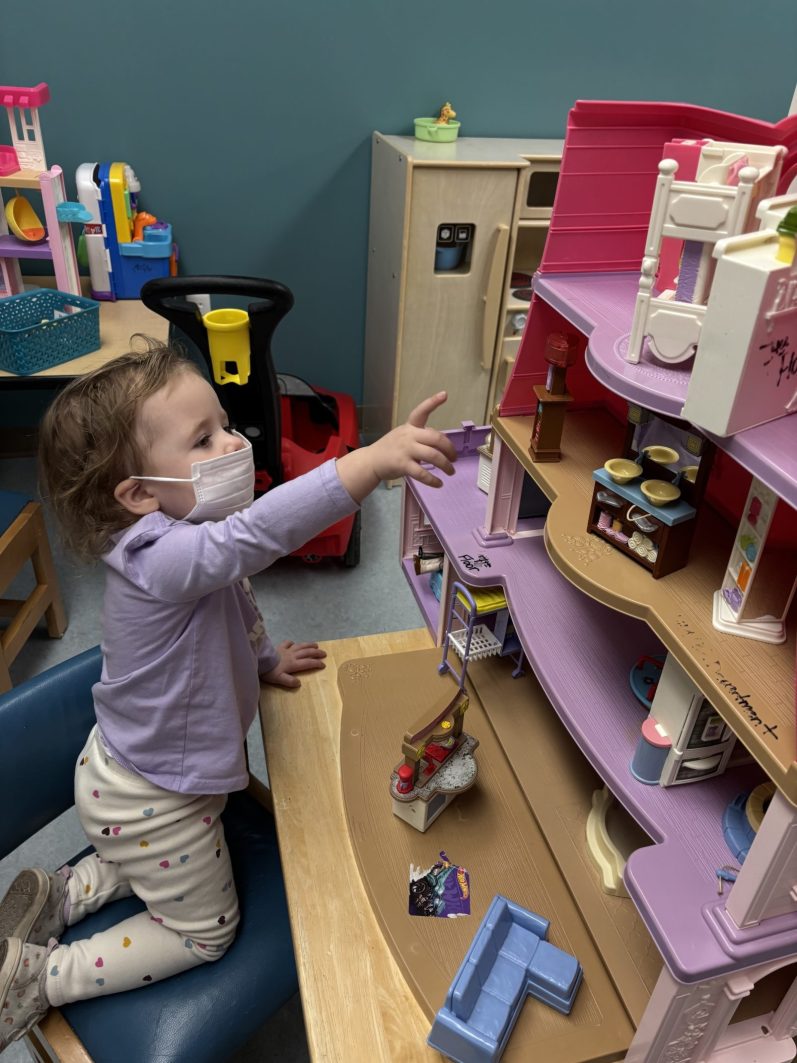
“I’m grateful for the people who have just taken care of us, so we can focus on what we need to do as a family,” Ashley said.
Today, Emma and her family are taking everything one step at a time. A large whiteboard in their kitchen is full of Emma’s appointments, medications, and other care tasks. She is still on more medications than she can count on one hand, all of which come with their own list of short- and long-term risks.
Ashley says sharing Emma’s story is important to their family because she wants people to see what’s possible. She wants other cancer families to find hopeful stories when they anxiously Google their child’s diagnosis in the middle of the night. And she wants people to know that their support for childhood cancer research makes a measurable difference for real kids.
“Research has given us so much, and we want to show people that supporting it really does have an impact – and at the same time, we need more,” Ashley said. “We want to make sure that the kids who come after her get access to what they need, and we want to lay down enough road in front of her that she can beat this cancer. There’s momentum now – we want to keep that going.”
Finding Hope: The Pediatric AML Collaborative at CCRF
Children’s Cancer Research Fund is now home to the newly formed Pediatric AML Collaborative, a national coalition of families, foundations, clinicians and researchers focused on accelerating research to better treat pediatric AML. By unifying efforts and resources, the Collaborative aims to create a coordinated, high-impact scientific strategy that will fund promising work in AML research across the country.
To learn more or join the Pediatric AML Collaborative, please visit https://childrenscancer.org/the-race-against-rare-leukemia/.